NewsArticle
Why we built a Datahub at Hubaria
If AI has transformed software development, it is first because code lives in one place. A legal matter is not so lucky: it is confidential, scattered, and has to serve several AIs. That is what led us to the Datahub.

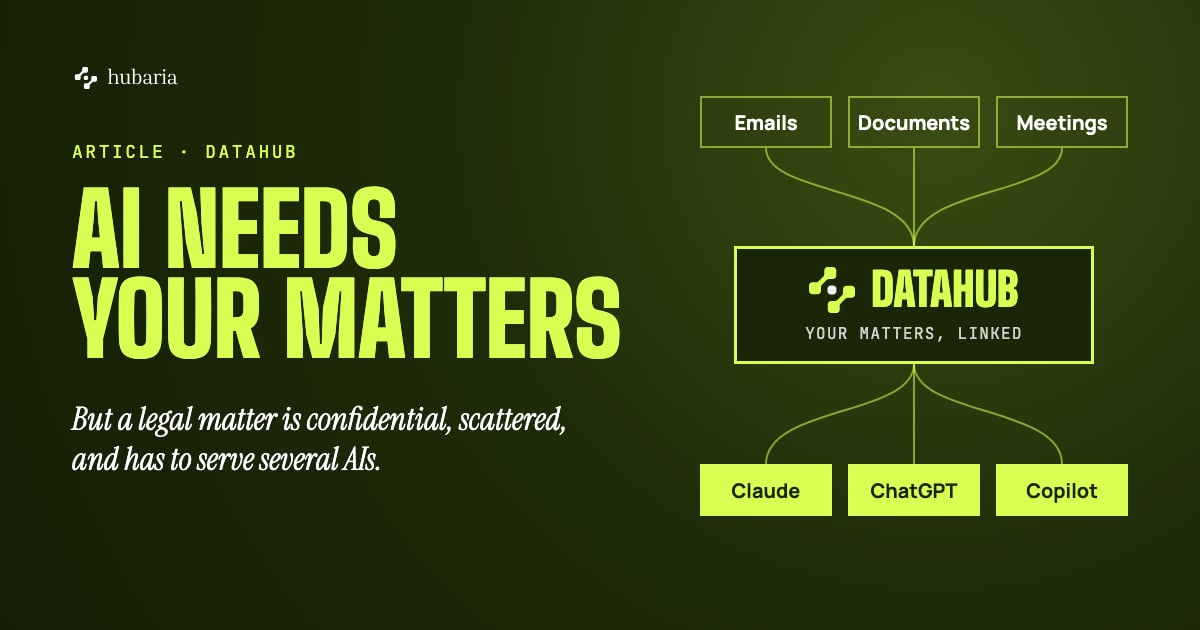
I often say that developers are on the front line of the AI transformation. I have been building software for twenty years, and I have never seen a profession move this fast.
There is a reason for it. It has less to do with the power of the models than with the way developers organise their work.
The Git repository, or why developers got ahead
For a developer, the whole project lives in one place: a kind of hub called a Git repository. The code, its history, every change, who made it and why. An AI that opens the repository sees the entire project in an instant.
The repository belongs to no tool. Claude Code, Cursor and Codex, AIs built for developers, all work on the same one. If a developer switches AI tomorrow, nothing is lost: the repository stays, the tool changes.
This website is built that way, as it happens. Its code lives in a Git repository, and an AI works on it with us.
What really makes the difference: access to data
For more than a year, first with uControlAi and now with Hubaria, I have been working on AI transformation for lawyers and in-house legal teams. And I am convinced of one thing: what really makes the difference is access to data. The choice of model comes second.
The more of a matter the AI can access, the more context it has. It understands your stakes, your know-how, what has already been said to the client. Its answers become relevant, and it can cite its sources.
The opposite shows straight away. Ask for a note before a hearing without giving the AI the other side’s submissions or the February emails: you will get a clean, well-structured text that misses the case.
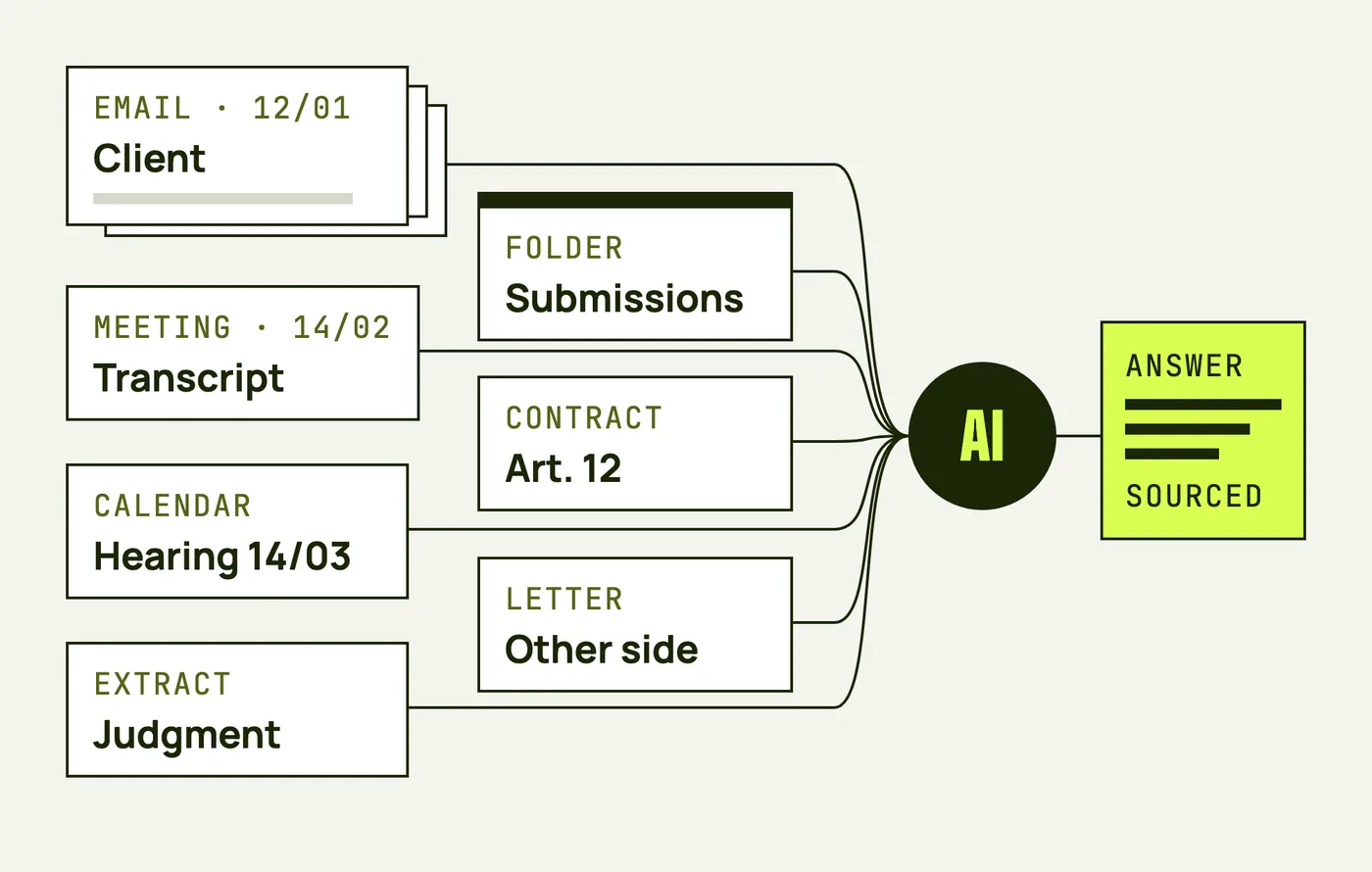
But a legal matter is not a Git repository. There are three differences, and each one raises a real problem.
1. A matter is confidential
Software code can move from one tool to another. A matter cannot. For a lawyer, it is professional secrecy. For an in-house team, it is trade secrets and the confidentiality of its legal advice. Either way, a matter cannot be handed to an AI as it is.
The answer we chose is pseudonymisation. Before anything is sent to a model, every person, every company, every place becomes a code. The AI works on the substance of the matter without knowing who is involved.
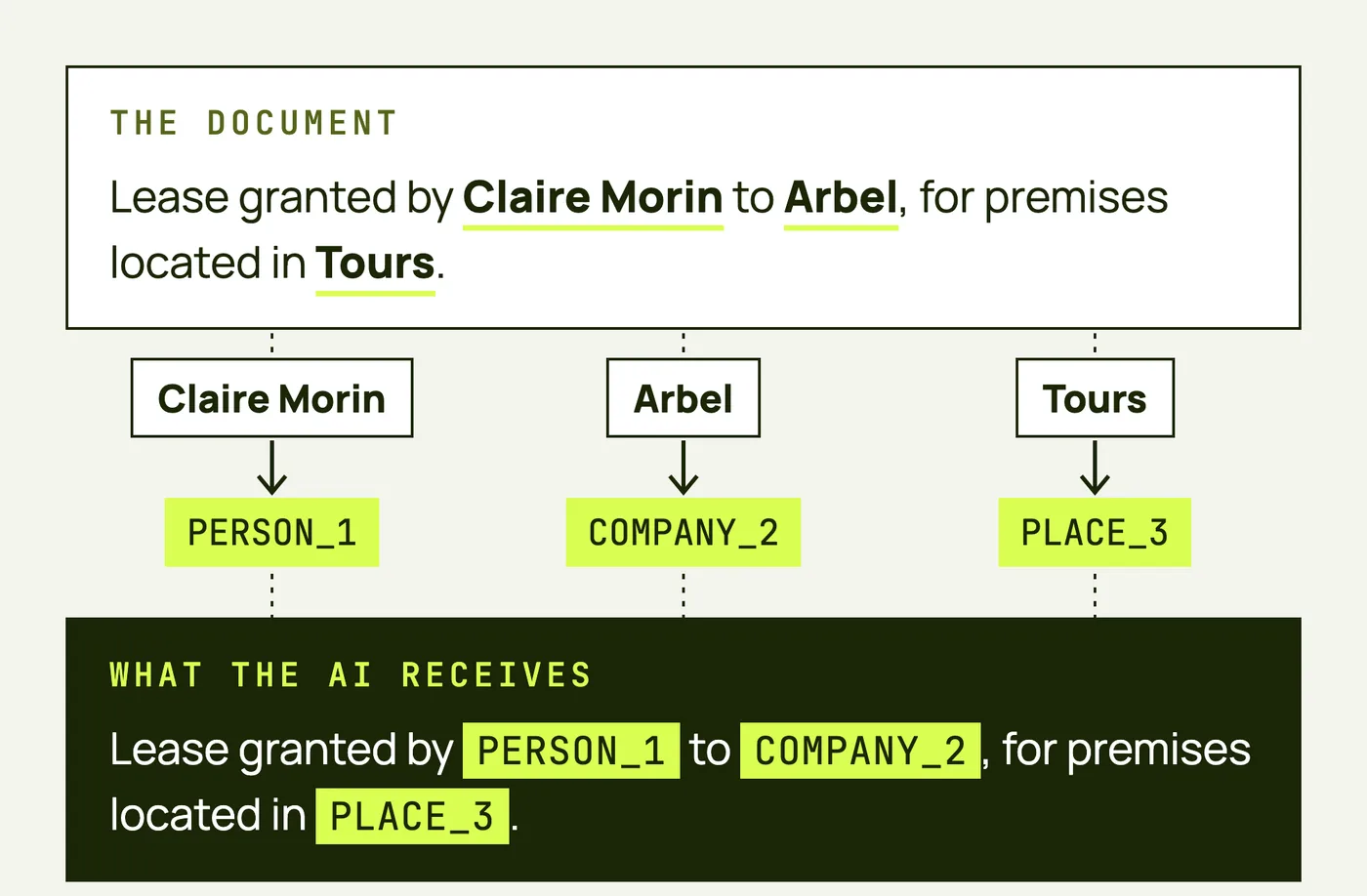
The real names are encrypted separately, with a key specific to your firm. They are restored only for authorised people, and every re-identification is logged.
This is also what the French National Bar Council (CNB) asks for in its April 2026 guide on ethics and AI: pseudonymise or anonymise data before entrusting it to a generative AI. I have set out its position in our article on professional secrecy and AI.
To be clear, I am not saying pseudonymisation solves everything. An amount or a project name is sometimes enough to recognise a case. It greatly reduces the risk, and it is still worth choosing what you send.
2. A matter is scattered, and it changes over time
In a Git repository, everything is in one place, and dated. In a firm, the matter is spread out: emails in Outlook, documents in the document management system, decisions in meeting minutes, deadlines in the calendar.
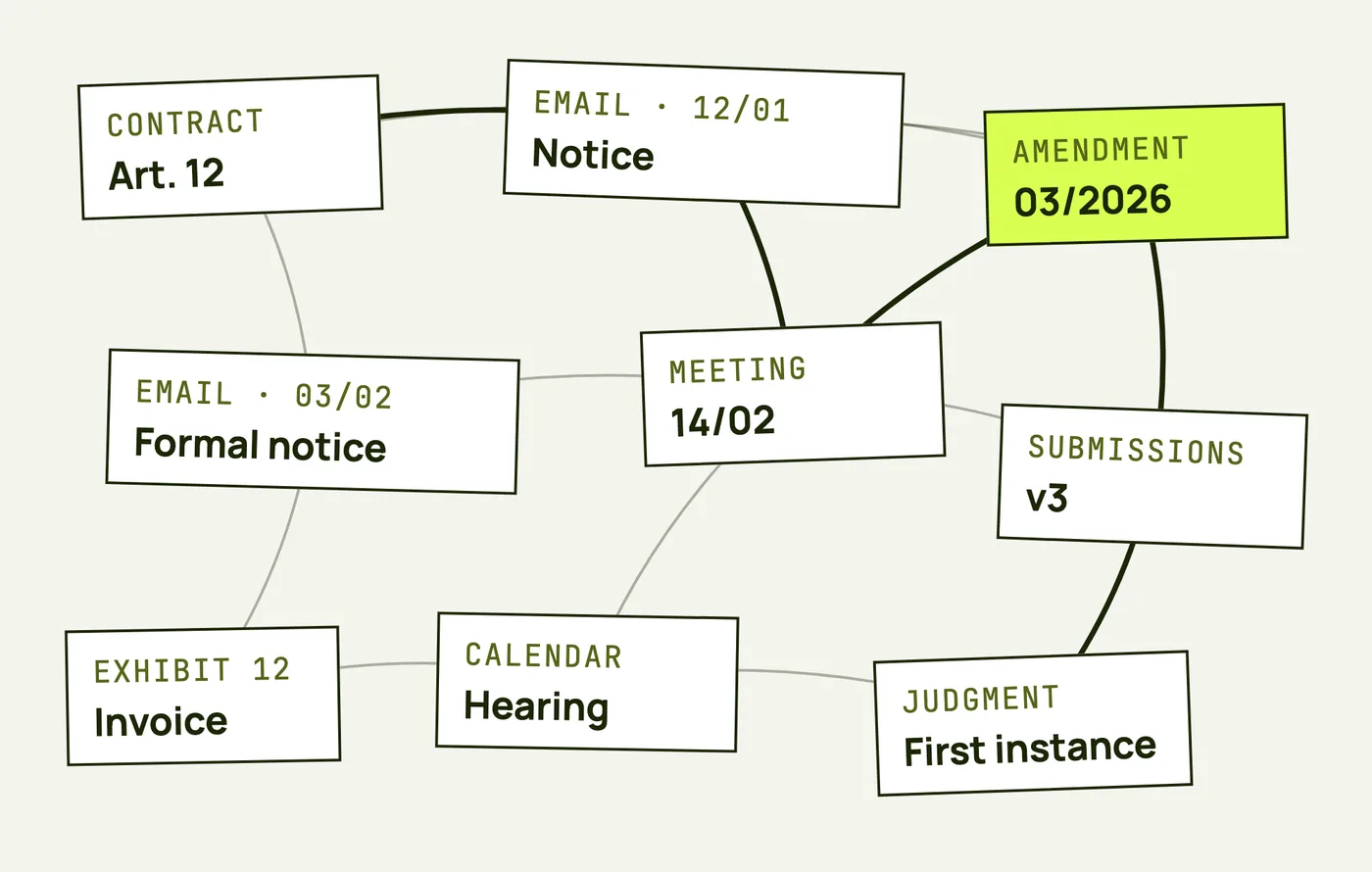
And these pieces answer one another. Take a contract whose article 12 sets a notice period. An email on 12 January disputes it, a formal notice goes out on 3 February, it is discussed at a meeting on the 14th, then an amendment in March rewrites the article. Version 3 of the submissions relies on all of it.
Give the AI the contract alone and it will quote the old article 12 without the slightest hesitation. Useful data is not a pile of documents but a graph: what answers what, which version replaces which, what happened between two dates.
3. A matter has to serve several AIs
Your teams already use several AIs. Claude for drafting, ChatGPT out of habit, Copilot because it sits in Word, a legal tool for research. And that list will have changed in six months.
Copying all your matters into each one is not sustainable. Five AIs means five copies to keep up to date and secure, and as many places where confidential information can leak. The day you change tools, you start again.
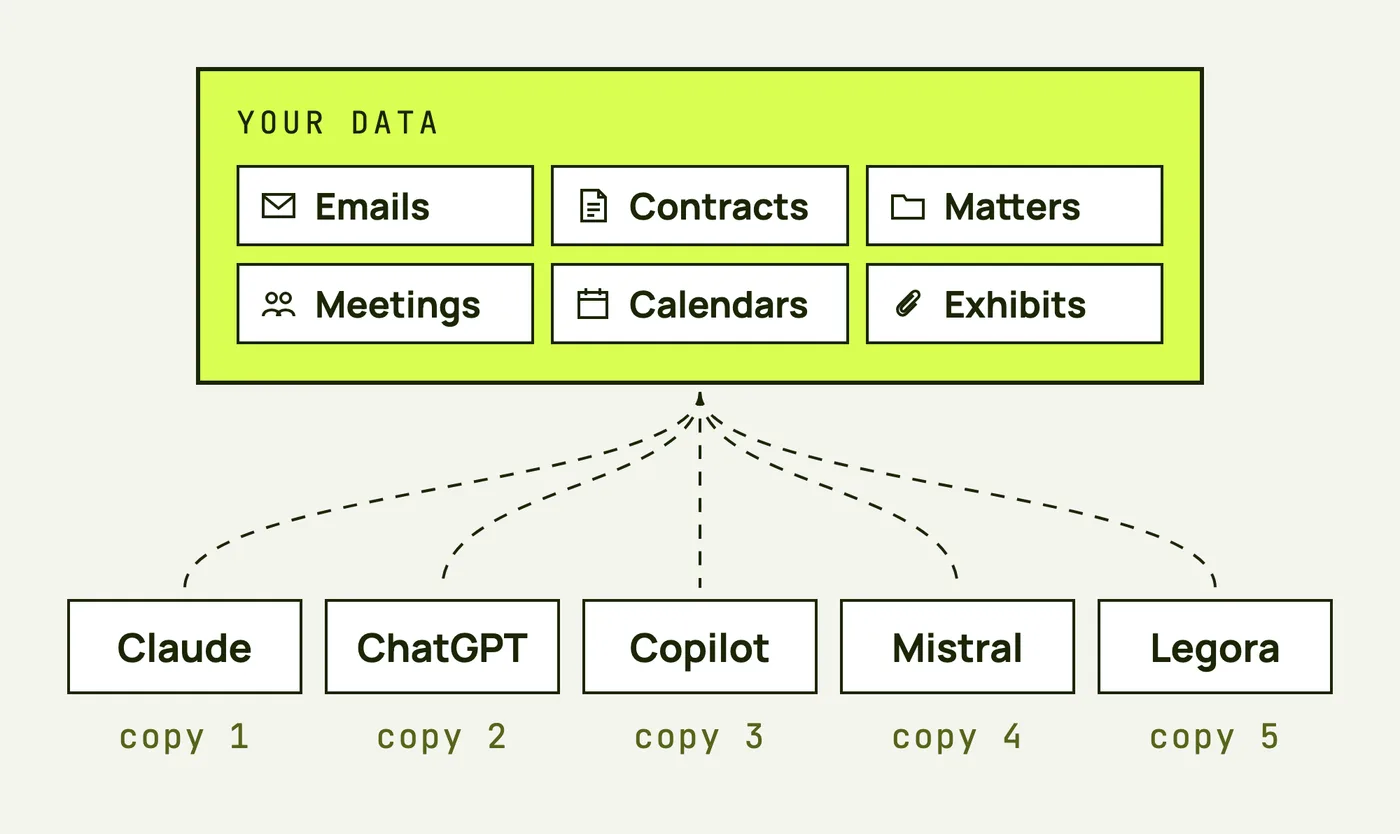
This is a question of sovereignty. Your asset is your matters and your methods: you need to know where they are, and to be able to choose the AI that accesses them without betting on a single tool.
The Datahub: a Git repository for your matters
Hence our idea: build that hub for lawyers and in-house legal teams. That is the Datahub.
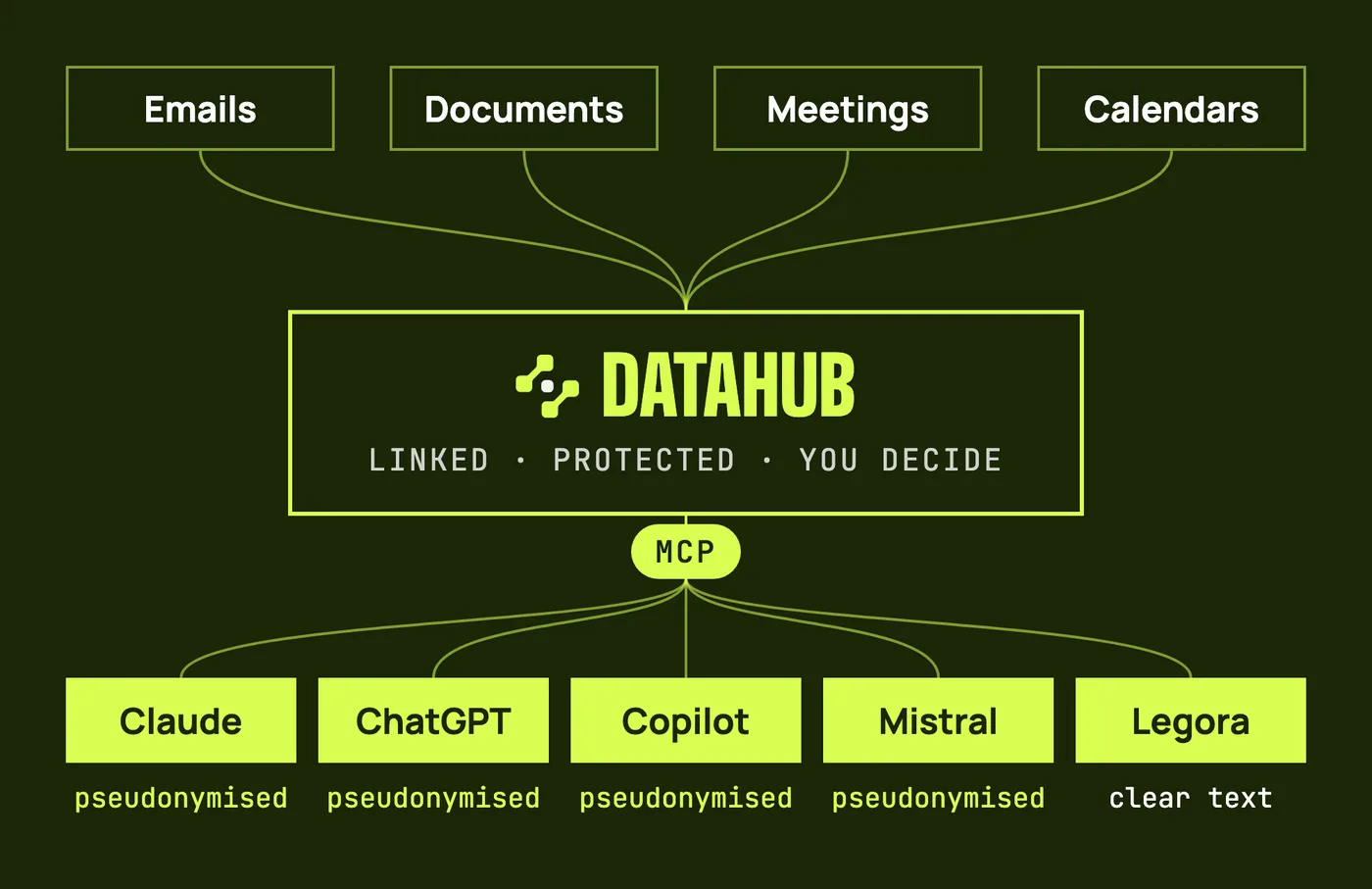
In practice:
- Your sources are connected once: emails, document management, meeting minutes, calendars. Your documents stay where they are; nothing is migrated.
- Documents are linked by matter, and over time: the version that prevails, the amendment that changes it, the email that discusses it.
- You decide what is pseudonymised and which AI has access. Your access rights apply: through the AI, everyone sees only what they are entitled to.
- Every AI consults the same foundation over MCP, the standard protocol that lets an AI query a source. Claude, ChatGPT or Copilot plug into it without copying anything.
The Datahub is hosted in France, on our servers or in your own infrastructure. The module is described in detail on the Datahub page.
That leaves the other half of the subject: your methods. Your matters tell the AI what the case is about; your methods tell it how to work. That is the role of the Skillhub.
If you are asking yourself the same questions, write to me: antoine@hubaria.com.